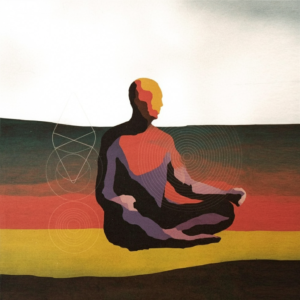
You sit in meditation, and the thoughts slow down. Then they stop. What remains is a blankness, no images, no commentary, no sense of the body.
Or you are not meditating at all. You are in the middle of an ordinary week, and a heaviness settles over everything. Work, relationships, plans, all of it feels like it is pointing toward nothing in particular. The day is full of activity and yet underneath all of it, a persistent absence. Something is missing, though you cannot name what.
These two experiences feel different on the surface. One is sought; the other arrives uninvited. One is a stillness stripped of thought; the other is a weight that no thought can lift. But they share a structure. In both, the mind finds no object that satisfies or fills it, and from this absence something is concluded: I am empty too.
The meditator thinks: after negating every object, what remains is a void, so perhaps the self is nothing. The person in the middle of their ordinary week thinks: if nothing in my life feels meaningful, perhaps there is nothing to me, nothing solid underneath.
What emptiness and incompleteness actually are
Apurnatvam and Shoonyam
Apurnatvam is the felt sense of deficiency, the sense that you are incomplete, that something is missing at the center. Shoonyam is the blank, objectless state encountered in silence or deep introspection, where everything seems to dissolve into a featureless void.
Both words point to real experiences that the tradition takes seriously. The question both are asking is the same: Is this emptiness what I fundamentally am? If the mind goes blank and the blankness is all that remains, is the self the blankness? If every source of meaning feels hollow, does that hollowness run all the way down?
There is one error underneath this confusion, and it is precise enough to name: you have taken yourself to be what you are observing. When all thoughts quiet down, or when the feeling of meaninglessness fills the mind, the observing itself continues.
The emptiness is there. So is the one for whom it is empty. These are not the same thing. The mistake is in treating them as if they were.
The conclusion that requires someone to draw it
The mind becomes still, or life feels flat and purposeless. You look inward and find nothing that satisfies, no vivid thought, no solid feeling of identity, just a blankness. From that blankness you draw a conclusion: “This is what I am. I am the nothing that remains.” The logic feels airtight. You have removed everything else. What is left must be you. And what is left appears to be a void.
But that conclusion requires someone to draw it. The blankness was observed. The void was registered. The emptiness was reported, even if only to yourself, even if only as a felt sense. None of that reporting happens without an observer doing the reporting.
You did not become unconscious when the thoughts stopped. You were there for the silence. You are there for the flatness. Something in you is present, watching, aware, even when what it is watching is nothing.
After negating every thought, feeling, and object, what remains is a void, and since the void is all that is left, it must be what I am. The emptiness is the self.
The emptiness is the content. You are the container. The saying of it, the knowing of it, the being troubled by it, all of this requires you to be present and conscious. A container cannot be made of what it contains.
This confusion is the most natural mistake a careful seeker can make. When you have honestly negated everything you are not, not the body, not the thoughts, not the changing emotions, and you arrive at a stripped-down silence, it genuinely looks like you have arrived at nothing. The very honesty of the inquiry produces the illusion of a dead end.
The sky does not become weather because it is full of weather. Despair moves through something. Flatness appears in something. Whatever you name this inner state, void, blankness, meaninglessness, it is content moving through a space that is not itself that content. The space watching the storm is not the storm.
What you are is not the emptiness. What you are is the one for whom there is emptiness. That distinction, between the observed void and the observer of the void, is a fact about the nature of experience itself.
Emptiness, to be known as emptiness, must be known by something. That something is what the next question must be about: what exactly is this awareness, and why can it never itself be empty?
What the blankness actually is in Vedanta
The blankness you encounter in meditation or in states of meaninglessness is not your true self. Naming it precisely matters. As long as it remains vague, the confusion persists.
In Vedanta, shoonyam, the blankness or emptiness you encounter, is not absolute nothingness. Absolute nothingness would mean the total cancellation of existence itself, including the existence of the one reporting it. That is not what is experienced. What is experienced is the absence of specific things: no particular thought, no definable feeling, no object presenting itself to awareness. The specific contents have withdrawn. But the state itself is still there, still known, still reported afterward. Something remains. That something is not nothing.
Avyaktam and Karana Shareeram
The blankness encountered in deep sleep or in meditation is what Vedanta calls avyaktam, the unmanifest state, or, in the language of the three bodies, the karana shareeram, the causal body. Creation in its seed form: not absent, but undifferentiated. Every specific thought, object, and experience has dissolved back into its potential, the way a tree is latently present in a seed without any tree being visible.
The same principle applies to the psychological experience of emptiness, the feeling that life has no color, that nothing matters, that there is a hollowness behind each activity. What has withdrawn is not existence, but vishesha jnanam, specific knowledge, particular engagement, the felt sense of meaning as a recognizable object. The absence of that particular content is what gets labeled “emptiness.” It is an absence of a specific kind of experience, not an absence of the experiencer.
Suppose you hold out an open hand and someone says, “Your hand is empty.” Vedanta corrects that description immediately: the accurate statement is not “the hand is empty” but “over the hand there is light.” The light is present and illumining the hand whether the hand holds something or holds nothing. The emptiness of the hand describes only the absence of an object in the hand, it says nothing about the light. The light is not empty.
Consciousness stands in exactly that relation to the blankness. When no thought, object, or feeling is present, Consciousness does not become absent. It continues to illuminate the absence. The state of blankness is, in Swami Paramarthananda’s precise formulation, a state where there is nothing other than the illumining Consciousness. The emptiness is the absence of everything that is not Consciousness.
The meditator who reaches the void and feels defeated has come close, all the objects are gone, only the illuminator remains, but then makes one final error: mistaking the illuminator for one more absence. The hand is finally empty of everything except the light, and the meditator misreads the light as one more kind of emptiness. Vedanta refuses the nihilist conclusion that the absence of objects means the absence of existence. Every report of nothingness confirms something: the presence of whatever is making that report.
Sakshi Caitanyam, the Witness that never went anywhere
What remains when every thought, every feeling, every object has gone quiet? Witness Consciousness, not a witness in the ordinary sense of someone watching from a distance, but the formless, unchanging principle of awareness itself, the sheer fact of knowing, without which nothing could be known at all. It is the formless awareness principle that illumines the presence of objects as well as the absolute absence of objects.
Every experience you have ever had, a crowded thought, a strong emotion, a vivid memory, a moment of clarity, was illumined by it. But so was the absence of all those things. The silence after the noise. The blankness after the cascade of thoughts in meditation. The dull flatness of a day that felt like nothing. Every one of those states, full or empty, turbulent or still, was known. Something was present to register them. That registering principle is Sakshi Caitanyam.
Sakshi Caitanyam
Sakshi Caitanyam is the Witness Consciousness that distinguishes itself from everything else ordinarily called awareness. When you say “I became aware of my anxiety,” you mean a thought arose about the anxiety, and that thought is itself an object that can come and go. But the awareness in which that thought appeared, and in which the thought’s absence also appears, does not come and go. It is what makes the stream visible.
Sakshi Caitanyam is self-evident. It does not need to prove itself by showing up as a new experience, the way a sound or a sensation shows up. It is the very capacity by which any discovery is possible. To look for it as though it were an object waiting to be found is to miss what it is entirely. It was never absent from any of your experiences, including the ones you called empty.
This is precisely what makes the experience of blankness, whether meditative or psychological, so instructive. When all objects are gone, what remains is not nothing. What remains is the awareness reporting the absence of objects. The state is blank. The awareness of that state is not. This awareness has never changed character depending on what it was illumining. It was the same awareness when your mind was flooded with thoughts as when your mind went quiet. It was the same awareness when life felt full of meaning as when it felt hollow. The states rotated. The awareness did not rotate.
One other property of Sakshi Caitanyam must be stated plainly, because it resolves a confusion that almost always arises here. People expect this awareness to feel like something, a warm presence, a light, a calm. They wait for it as they might wait for a meditative experience to arrive. But it cannot arrive, because it was never absent. It is not produced by practice. Practice can quiet the noise that makes it hard to recognize, but recognition is not production. What is always already present cannot be manufactured.
If awareness cannot arrive because it was never absent, if it was present during every state you have called empty, then what exactly have you been searching for?
Why reporting a void disproves the void
Here is the problem with saying “there is nothing there.” To say it, you have to be there. It is the sharpest logical knife Vedanta carries. The moment you report an absence, “I experienced only blankness,” “there was nothing left,” “I felt a complete void,” you have already disproved your own claim. A void that is known is not a pure void. It is a void with a knower. And that knower is precisely what you were searching for.
There is no absence without a witness. Not a philosophical preference but a logical necessity. Absence, blankness, nothingness are not self-announcing. A dark room does not declare itself empty, someone walks in, registers the emptiness, and reports it. The registering proves the registerer was present throughout.
The meditator who says “I reached a state of total blankness” has already given the game away. I reached it. I was there when the blankness was. The blankness was the content; the “I” was the container. You cannot contain your own container. The blankness cannot contain the one aware of the blankness.
A student walks into a hall, looks around, and tells someone: “Nobody is there.” It means nobody other than the student is there. The student subtracted themselves from their own report. “Nobody” meant “nobody else.” When you say “I experience nothing,” you mean: nothing other than the experiencing itself is present. The experiencer subtracted themselves from the account. That subtraction does not make them disappear. It only makes them harder to notice. What would it mean to stop subtracting yourself from your own report?
Sakshi Caitanyam, Witness Consciousness, the observing awareness, was present the entire time, quietly illumining the blankness the way light illumines an empty room. Without the light, you couldn’t even know the room was empty.
The Vedantic position is not that emptiness is an illusion or that your meditative void didn’t happen. It happened. The blankness was real. What was wrong was the conclusion drawn from it: that because nothing else was there, you were also nothing. That conclusion requires you to vanish at precisely the moment you are doing the concluding. It doesn’t hold.
What the Witness does when thoughts disappear
When the mind goes quiet, in meditation, in deep states, in certain moments of despair where all motivation drains away, the usual furniture of thought disappears. Without that furniture, the mind has no obvious object to point to as “me.” So it points at the blankness and says: this must be what I am. But pointing at the blankness is itself an act. Something is doing the pointing. That something is not the blankness.
Sakshi Caitanyam illumined the presence of thoughts when thoughts were there. It illumined the absence of thoughts when thoughts were gone. Neither state disturbed it. Neither state defined it. It was the unchanging witness of both. The consciousness aware of emptiness cannot itself be empty, because an empty awareness could not be aware of anything, including its own emptiness.
But a question remains, and the mind will form it almost immediately. If I am this Witness, how do I experience it? How do I find it, see it, verify it for myself?
Here is where the seeker lodges a final, reasonable complaint: “Fine. The logic is clear. But I want to see this Witness. How do I experience it directly?” Not a wrong question. The next honest question. And it contains a hidden assumption that, once exposed, resolves the whole thing.
The assumption is that Witness Consciousness is something you will eventually encounter, a special object, a luminous presence, a mystical vision that will appear when conditions are right. The seeker is extending the habit that has governed every other inquiry: look for the thing, find the thing, know the thing. That habit works for every other object in existence. It fails exactly once, and that failure is instructive.
Why you cannot find the Witness by looking for it
Every object you have ever perceived, a thought, a feeling, a sensation, the blankness itself, was perceived by something. That something was you, the subject. Now you are asked to perceive the perceiver. The subject cannot step outside itself to become its own object. The eye cannot see itself without a mirror; and here there is no mirror, because any mirror would be another object, perceived by the same subject you are trying to locate. The search loops back to its starting point every time. It is the structure of subjectivity itself.
Witness Consciousness cannot be objectified not because it is hidden, but because it is the instrument of all seeing. When you look for it, you are using it to look. When you fail to find it, it is the one registering the failure. When you sit with eyes closed and notice the blankness, it is already present as the one noticing.
Witness Consciousness is something you will eventually encounter through sufficient practice, a luminous presence or special experience that appears when conditions are right.
The subject cannot be objectified, not because it is hidden, but because it is the instrument of all seeing. It cannot arrive because it was never absent. Recognition is not production. What is always already present cannot be manufactured.
So the teaching pivots. Not: keep searching, you will find it. But: stop searching for a new experience, and recognize what is already doing the experiencing. It is a clear instruction about where to direct attention, not outward toward a new object, not inward toward a new feeling, but to the self-evident fact that awareness is already present. You do not need to produce it. You cannot lose it. The states changed. It did not.
This is where You Are That becomes something other than a slogan. It is a direction of identity. The shift this requires is not experiential but cognitive, a recognition, not an acquisition. What would change if you stopped looking for the Witness as a new experience and simply noticed what is already doing the looking?
Poornam, the fullness that has no boundary to lack
The awareness in which emptiness appears has never been empty. The feeling of pointlessness, the meditative void, the heavy sense that nothing matters, all of these were contents within you, not facts about you. Your true nature is sakshi caitanyam: the Witness Consciousness that has been doing the witnessing throughout every experience described here. And this Witness is, in the exact language of the tradition, poornam, full, complete, without lack. Not full the way a cup is full, which can be emptied. Full in the sense that it has no boundary where something could be missing.
The thoughts came and went. The feeling of meaninglessness arrived and will someday lift. The meditative void opened and closed. The Witness did not flicker once. What does not flicker cannot have a lack built into it. A lack is a change, a subtraction that registers. The Witness registers all subtractions without itself being subtracted from.
Instead of claiming the caitanyam component of the blankness as himself, he is taking the blankness as himself. You were standing at the correct address, in the presence of the correct truth, looking at the wrong thing. The emptiness was in the room. You were the light in the room.
The despair was not lying when it reported itself as real. The blankness was not an illusion. Both appeared, and your awareness dutifully registered them. The error was never in the experience. The error was in the conclusion: that because emptiness appeared, you must be made of emptiness. The sky does not become weather because weather appears inside it. The sky’s nature is not altered by the storm, and it is not restored to itself when the storm passes, it was itself throughout. You, as the Witness, were that throughout.
The apurnatvam, the felt sense of incompleteness that can color an entire life, was a burden carried by someone who believed they were the emptiness rather than the observer of it. That burden had a specific address: the false identification. Once the identification is corrected, the question “why do I feel so empty?” transforms. The feeling may still arise. But it arises in you, not as you. You are not the patient. You are the space in which the patient appears.
What this leaves you with is not a new experience to seek. It is a recognition of what has been true without interruption. The Witness was present when you first felt the void. It is present now. It did not have to be cultivated, earned, or meditated into existence. It is what you already are, the full, complete, ever-present awareness in whose light both fullness and emptiness appear, and which itself belongs to neither. The void was a signpost whose message, when finally read, says: the one looking for fullness is the fullness. What would it mean to stop searching and simply be what you already are?